
Why Visibility Alone Is Not Enough
Freight visibility software has become a standard part of the logistics technology stack. Shippers want better arrival times. Brokers want fewer check calls. Customers want accurate shipment tracking. Carriers want cleaner operations, stronger service levels, and fewer people chasing updates all day.
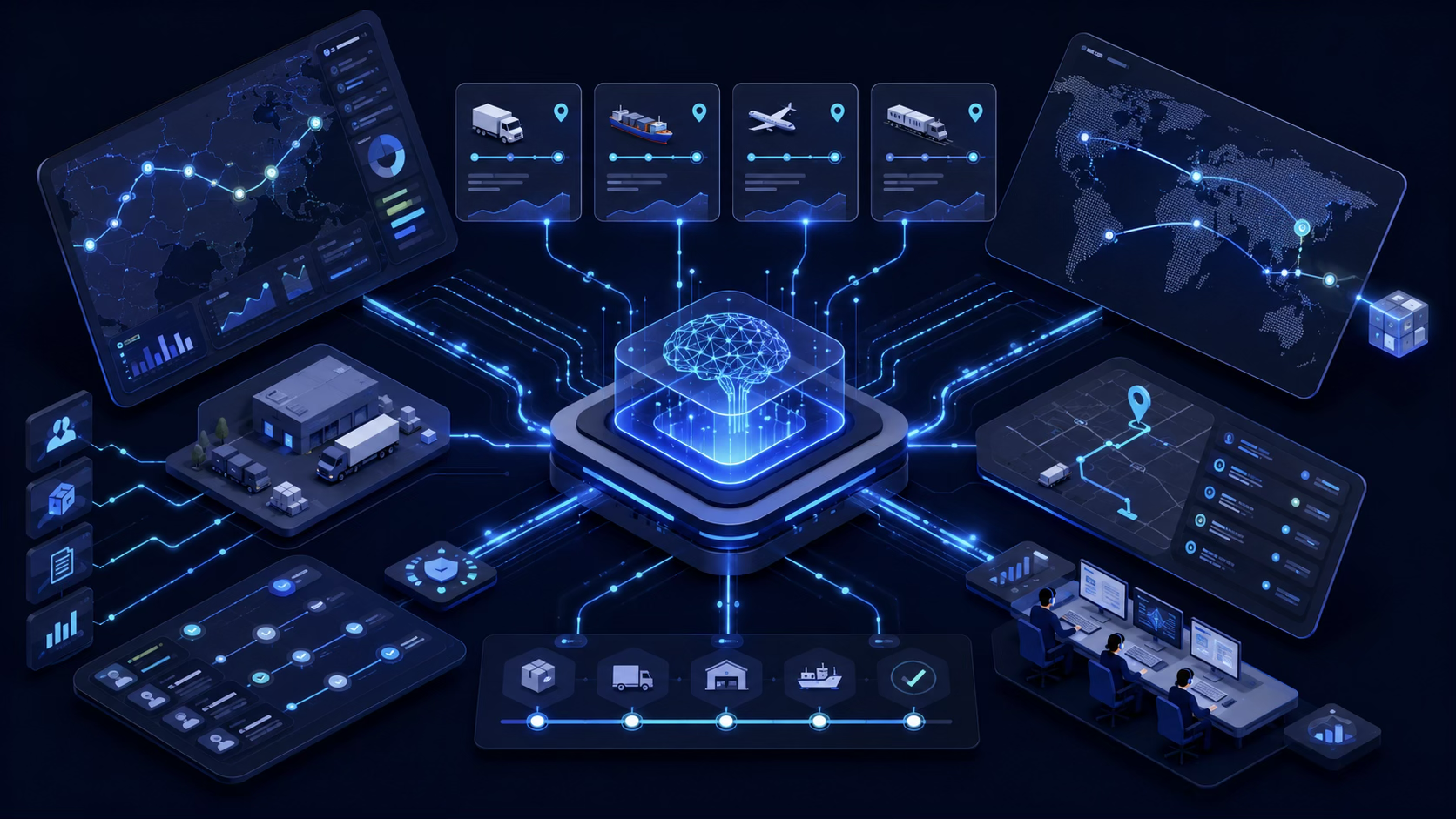
But visibility alone does not fix the operation. A dashboard can show that a shipment is late. It cannot call the driver, capture the reason, update the TMS, notify the shipper, or escalate the exception to dispatch. That gap is where carriers feel the hidden cost of poor freight visibility: more systems, more manual work, and more pressure on the people keeping freight moving.
What Freight Visibility Software Actually Does
Freight visibility software gives stakeholders a clearer view of freight in transit. At a basic level, it brings together shipment status, ETA data, vehicle location, and exception alerts so teams can understand what is happening across truckload, LTL, last-mile, and sometimes multimodal transportation modes.
A modern visibility platform may pull data from TMS and transportation management systems, telematics providers, ELD systems, GPS data, ERP environments such as Oracle or SAP, mobile app check-ins, API connections with shippers and freight forwarders, IoT devices, sensors, and real-time tracking tools.
That data can support supply chain visibility, shipment tracking, pricing decisions, forecasting, procurement, customer satisfaction, global trade workflows, and global supply chain planning. Some shippers and 3PLs may already rely on transportation visibility platforms such as project44 or FourKites. Others may use broader supply chain visibility software inside a larger supply chain management stack.
For carriers, the important thing is not the label. It is the functionality. The software should make supply chain operations easier to run by answering three questions quickly: Where is the load? What changed? What needs to happen next?
Why Visibility Breaks Down For Carriers
The promise of freight visibility is simple: fewer surprises. The reality is messier.
Most carrier operations are built across several disconnected systems. Dispatch has the TMS. Safety has its own tools. Maintenance has another system. Telematics shows vehicle location. Email holds shipper instructions. Customer updates may live in yet another portal. Hyperscale describes this as the everyday problem of driver managers juggling disconnected systems while drivers wait for support and operations teams spend more time in software than actually running operations.
That is why visibility solutions can underdeliver. They may surface real-time data, but they do not always connect that data to the workflow that needs it.
A late ETA is not useful if someone still has to notice the alert, confirm shipment status, call the driver, update the TMS, email the shipper, log the issue, and notify internal stakeholders. That is not end-to-end visibility. That is a dashboard creating another task.
The Carrier Use Cases That Matter Most
Carriers do not need visibility for visibility’s sake. They need operational efficiency. They need better decision-making. They need fewer manual check calls, faster exception handling, and cleaner real-time insights across logistics operations.
ETA And Arrival Time Management
ETA accuracy is one of the clearest use cases. Shippers care about on-time performance, appointment windows, and arrival times. Dispatchers care because every late or uncertain ETA creates more calls.
Good freight visibility software should combine real-time tracking, telematics data, traffic context, route progress, and driver communication. Better systems go further by triggering workflows when an ETA slips: confirm the delay, update shipment status, notify the customer, and document the reason. The goal is to keep everyone aligned before a disruption becomes a service failure.
Disruption And Exception Management
Disruptions happen constantly: detention, weather, breakdowns, missed appointments, facility delays, routing changes, or driver availability issues. A visibility dashboard can show the problem. An operational workflow should help solve it.
Carriers should look for systems that help them prioritize exceptions by business impact. A minor delay with no appointment risk should not get the same urgency as a load that is about to miss a shipper commitment. The best workflows use real-time data, business rules, and algorithms to decide what needs attention first.
Shipper And Customer Updates
Customer satisfaction depends on consistency. Shippers should not need to ask for every update. Freight visibility should help carriers proactively send useful updates about loads in transit, delays, delivery confirmations, and ETA changes.
Hyperscale’s platform positioning is relevant here because it focuses on AI agents that handle routine work while teams stay in control, connecting to TMS, telematics, email, safety, maintenance, and scheduling systems instead of forcing teams into a new standalone workflow.
A carrier that can automate shipper updates from trusted operational data can improve service without adding more dispatcher workload.
Operational Metrics And Service Levels
Visibility should also help leadership understand performance. Common metrics include on-time pickup, on-time delivery, dwell time, delay reasons, tender acceptance, utilization, service levels, and customer-specific exception trends.
External freight data from the Bureau of Transportation Statistics freight transportation resources and the FHWA Freight Analysis Framework can help leaders understand broader freight movement and multimodal trends, but carrier-level decisions still depend on clean operational data from fleet systems.
Where Most Visibility Platforms Stop Short
Many supply chain visibility solutions are built around shippers, not carriers. That is not automatically bad, but it can create misalignment.
A shipper may want a clean portal and accurate updates. A carrier also needs dispatch workflows, driver communication, onboarding, API reliability, and system-of-record accuracy inside the TMS. If the visibility platform only serves the shipper’s dashboard, the carrier may still absorb the manual work required to feed it.
That creates four problems: incomplete ELD, telematics, mobile app, and driver data; slower onboarding across provider APIs; manual workflows that still require dispatch to translate alerts into action; and reporting that misses context from calls, emails, or driver notes. The carrier ends up with more visibility, but not less work.
What Carriers Should Look For Instead
A stronger approach starts with business needs. Before choosing freight visibility software, define the operational outcomes that matter.
Ask which workflows create the most manual work, which customers or lanes have the highest service sensitivity, which disruptions are most expensive, which systems own shipment status, which updates should be automated, and which stakeholders need access to real-time insights. Then evaluate functionality against those needs.
Integration With Existing Systems
The software should connect cleanly with the TMS, telematics, ERP, safety, maintenance, and customer communication systems already in use. For carriers, the practical path is connecting the systems that already run the operation.
Hyperscale’s Terminal approach is built around this idea: no new software to learn, connected systems, AI agents that monitor everything, and a full audit trail.
Automation Beyond The Dashboard
A dashboard is helpful. Automation is where the leverage shows up.
Look for workflows that can:
- Capture driver updates
- Trigger shipper notifications
- Update the TMS
- Escalate exceptions
- Start track-and-trace actions
- Route safety or maintenance issues to the right team
- Log decisions for auditability
Hyperscale’s related guidance on AI fleet operations makes the same distinction: visibility is useful, but execution improves fleet performance.
Driver-Friendly Communication
Freight visibility often fails when it depends on drivers doing extra work in another app. Drivers are moving, waiting, checking in, handling facility issues, and managing hours. A carrier-friendly system should reduce driver friction, not create another mobile app task.
Voice AI, automated calls, and simple driver workflows can help carriers collect updates without forcing every driver into a new process. This connects directly to dispatch automation: routine updates should be handled consistently, while dispatchers focus on exceptions.
Emissions And Sustainability Visibility
More shippers are asking about emissions, fuel efficiency, and sustainability. EPA’s SmartWay program is one useful reference point for freight efficiency and emissions benchmarking.
For carriers, emissions visibility should connect back to route planning, idle time, fuel stops, detention, utilization, and mode choices. Visibility is strongest when it helps operators optimize the work, not just report after the fact.
How Hyperscale Fits The Visibility Conversation
Hyperscale is not just another shipment dashboard. It is an AI-powered dispatch, driver monitoring, and fleet optimization platform built for carriers. The platform connects systems like TMS, telematics, email, safety, and maintenance, then uses AI to handle routine workflows while the team stays in control.
That matters because the next step after freight visibility is execution.
A carrier does not just need to know a driver is running late. The operation needs to call the driver, capture the reason, update the ETA, notify the shipper, log the delay, and escalate if service is at risk. Hyperscale’s live skills, including load notifications, order entry, wake-up calls, and safety coaching, are designed around those real workflows.
Final Takeaway: Visibility Should Move Work Forward
Freight visibility software is valuable only if it reduces operational friction. Carriers should not settle for a visibility platform that simply adds another dashboard. The best visibility solutions connect real-time data to action. They streamline dispatch workflows, improve ETA updates, support shippers, reduce inefficiencies, and help teams optimize service without more manual work.
If visibility does not help the operation move faster, it is incomplete. The future is real-time visibility connected to real-time execution.
FAQ
Q: What Is Freight Visibility Software?
Freight visibility software helps carriers, shippers, brokers, and logistics teams track freight in transit, monitor shipment status, predict ETAs, and manage disruptions. It usually connects data from systems like a TMS, telematics platform, ELD, mobile app, ERP, or transportation visibility platform, so teams can see where loads are and what needs attention.
Q: Why Do Carriers Need Freight Visibility Software?
Carriers need freight visibility software because dispatch teams are often managing loads across disconnected systems. Without real-time visibility, teams spend more time making check calls, chasing shipment updates, reacting to late ETAs, and manually updating shippers. Better visibility helps carriers streamline workflows, improve on-time performance, and reduce operational inefficiencies.
Q: How Is Freight Visibility Different From Shipment Tracking?
Shipment tracking usually answers one basic question: where is the load? Freight visibility goes further by connecting shipment tracking with ETA management, exception alerts, customer updates, operational metrics, and decision-making workflows. For carriers, the real value comes when visibility leads to action, not just another dashboard.
Q: What Systems Should Freight Visibility Software Integrate With?
For carriers, freight visibility software should integrate with the systems already running the operation, including the TMS, telematics systems, ELD, safety tools, maintenance systems, email, ERP platforms, and customer communication workflows. Strong API connectivity matters because visibility breaks down when data sits in separate systems.
Q: What Are The Most Important Freight Visibility Features For Carriers?
The most important features include real-time tracking, ETA updates, disruption alerts, shipment status updates, automated customer notifications, dashboard reporting, TMS integration, telematics integration, and exception management. Carriers should also look for automation that helps dispatchers update systems, contact drivers, notify shippers, and escalate issues without extra manual work.
Q: Can Freight Visibility Software Improve Customer Satisfaction?
Yes. Freight visibility software can improve customer satisfaction by giving shippers and receivers faster, more accurate updates about arrival times, delays, and load status. When updates are proactive instead of reactive, customers have fewer reasons to call dispatch for basic information.
Q: Why Do Some Visibility Platforms Fall Short For Carriers?
Some visibility platforms are built mainly for shippers, which means they may create extra work for carriers. A shipper-facing dashboard may still require dispatchers to call drivers, update the TMS, send emails, and document exceptions manually. Carrier-friendly visibility should connect real-time data to operational workflows.
Q: How Does AI Improve Freight Visibility?
AI improves freight visibility by helping teams move from monitoring to execution. Instead of only showing a late ETA or shipment exception, AI agents can help trigger the next step: contacting a driver, gathering context, updating the TMS, sending a shipper notification, or escalating the issue to dispatch. This helps carriers turn real-time visibility into real-time action.
About Hyperscale Systems
Hyperscale Systems has pioneered a unified AI agent platform that transforms operational communications across physical industries. Founded by logistics technology veterans with deep expertise from leading companies like Samsara, Hyperscale integrates seamlessly with major TMS, FMS, and telematics providers to deliver contextual agentic workflows that eliminate operational bottlenecks while enhancing human capability.